Writing
These days most of my writing is about one idea: the quantitative tools Wall Street uses to measure performance and risk shouldn't be reserved for Wall Street.
The book
Improving Performance and Risk: An Actionable Guide For the Rest of Us
A brief, non-math guide to Wall Street quantitative techniques.
Most investors judge an investment by one number: how much it went up. Professionals look at performance and risk together, and size their positions accordingly. This guide explains those ideas in plain language, with charts and real examples from stocks, indexes, gold, and crypto, and without requiring any math.
You don't need to understand how an engine works to drive a car. In the same way, you don't need statistics to benefit from what quantitative finance has learned.
"To democratize Wall Street investment technology for mainstream investors and make it super-affordable, so that all mainstream investors can benefit, not just Wall Street professionals."
What it covers
Part A (published December 2018):
- The power of quantitative finance for your investments
- What performance and returns really mean
- Understanding and measuring risk
- An intuitive way of looking at volatility
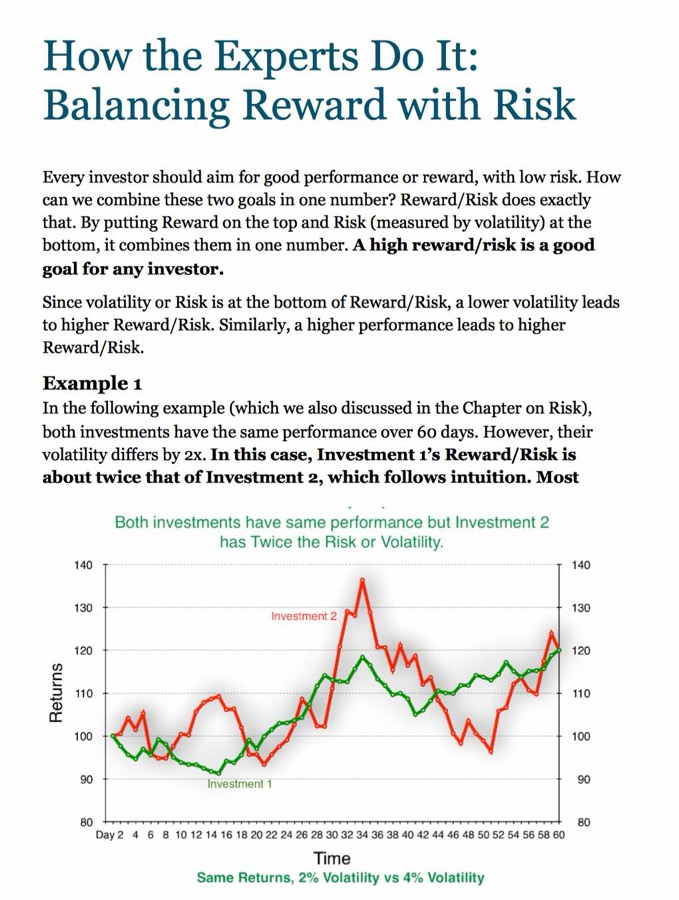
- How the experts do it: balancing reward with risk
- Putting it all together
Part B (in progress):
- Crash and tail risk
- Correlation, diversification, and hedging
- Risk-balanced allocation
- Trends and momentum
- Comparative intelligence: judging investments relative to each other
From book to tools
The ideas in the book now live in free, interactive form in EasyCompare and BetterThanSPY, part of my quantitative investing initiative. Instead of static tables from 2018, you can see reward versus risk, volatility, and drawdowns for any stock or ETF, updated daily.